Table of Contents >> Show >> Hide
- Why Internships Matter More Than Ever
- 1. Internships Provide Real-World Work Experience
- 2. Internships Build Career Readiness Skills
- 3. Internships Help Students Explore Career Paths
- 4. Internships Strengthen Resumes and Portfolios
- 5. Internships Expand Professional Networks
- 6. Internships Can Lead to Full-Time Job Offers
- 7. Internships Build Confidence
- 8. Internships Offer Mentorship and Feedback
- 9. Internships Help Students Understand Workplace Culture
- 10. Internships Improve Academic Learning
- 11. Internships Can Provide Financial Benefits
- 12. Internships Teach Students How to Job Search Smarter
- How to Get the Most Out of an Internship
- Real-World Internship Experiences: What Students Often Learn
- Conclusion: Internships Turn Potential Into Proof
Internships are the career world’s version of a test drive. Instead of buying the whole caralso known as committing years of your life to a professionyou get to sit in the driver’s seat, adjust the mirrors, learn where the buttons are, and decide whether the engine makes your heart race or your soul quietly request a transfer.
For college students, recent graduates, and career changers, internships offer far more than a line on a resume. They help people build real-world skills, explore industries, meet professionals, understand workplace expectations, and sometimes land full-time jobs before the graduation cake has been ordered. In a competitive job market, internship experience can turn “I studied this” into “I have actually done this,” which is a pretty big upgrade.
The essential benefits of internships include practical experience, stronger career readiness, professional networking, resume development, confidence, mentorship, and clearer career direction. Whether the internship is paid, for academic credit, remote, hybrid, part-time, or tucked between classes and caffeine, the right experience can make the transition from school to work much smoother.
Why Internships Matter More Than Ever
Today’s employers often look for more than a degree. They want proof that candidates can communicate, solve problems, manage deadlines, use technology, work on teams, and adapt when the Monday morning plan collapses by 9:17 a.m. Internships give students a place to practice those skills before they enter a full-time role.
Colleges, career centers, employers, and workforce experts consistently describe internships as one of the strongest bridges between education and employment. Classroom learning builds the foundation, but internships show students how that knowledge behaves in the wild. A marketing student may learn brand strategy in class, then discover during an internship that writing social captions for a real client requires speed, judgment, creativity, and the emotional strength to accept feedback like “Can we make it pop?”
Internships are also valuable because they reveal the hidden side of work. Students learn how teams communicate, how meetings are run, how managers make decisions, how deadlines shift, and how professionals handle mistakes. These lessons are difficult to capture in a textbook, mostly because textbooks cannot sigh dramatically after a budget meeting.
1. Internships Provide Real-World Work Experience
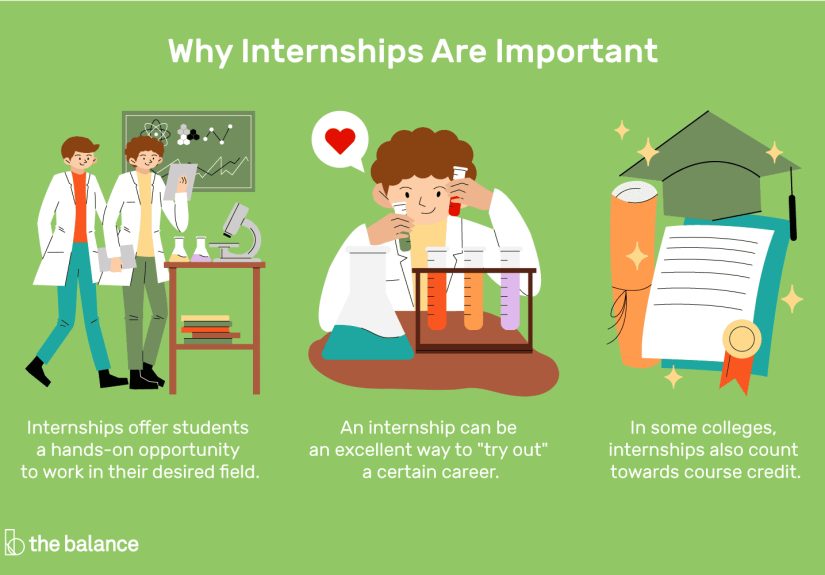
The most obvious benefit of internships is practical work experience. Students get to apply academic knowledge to actual projects, tools, clients, customers, or research questions. This matters because many entry-level job descriptions ask for experience, which can feel like a riddle wrapped in a job board: “How do I get experience if every job requires experience?” Internships help answer that question.
During an internship, a student might write reports, analyze data, assist with events, support lab research, create design materials, test software, help with patient intake, observe court procedures, or contribute to community outreach. These tasks turn abstract learning into usable ability. Instead of saying, “I understand project management,” an intern can say, “I helped coordinate a six-week campaign, tracked deliverables, and prepared weekly updates for the team.” That sounds much stronger because it is specific.
Real-world experience also helps students understand workplace standards. They learn that professional writing is not the same as academic writing, that email tone matters, and that “quick question” may sometimes become a 37-minute discussion with three follow-up tasks. These little workplace lessons add up quickly.
2. Internships Build Career Readiness Skills
Internships are powerful because they build career readiness, which means the skills and habits needed to succeed in a professional environment. These include communication, teamwork, critical thinking, leadership, professionalism, technology use, and the ability to manage one’s own growth.
In class, students may practice these skills through assignments and group projects. In an internship, the stakes feel more real. A late update may affect a coworker’s timeline. A confusing spreadsheet may slow a client report. A thoughtful question may save the team from an avoidable mistake. Internships help students understand how their work fits into a bigger system.
Communication Becomes Practical
Interns learn how to ask clear questions, summarize progress, write professional messages, and speak up in meetings. They discover that good communication is not about using the fanciest words; it is about helping people understand what is happening, what is needed, and what comes next.
Problem-Solving Gets Stronger
Every internship includes small puzzles. Maybe the software will not cooperate. Maybe a customer has a problem. Maybe a file is missing. Maybe the printer, in its ancient wisdom, has chosen violence. Interns learn how to troubleshoot, seek help, and stay calm enough to move forward.
Professionalism Becomes a Habit
Showing up on time, meeting deadlines, receiving feedback, protecting confidential information, and respecting workplace culture are essential professional habits. Internships give students a safe place to develop them.
3. Internships Help Students Explore Career Paths
One of the most underrated internship benefits is career clarity. An internship can confirm a student’s dream career, redirect them toward a better fit, or reveal that a job title sounds glamorous but mostly involves spreadsheets named “FINAL_final_v8.” That discovery is not a failure. It is valuable information.
Many students choose majors before they fully understand the daily reality of related careers. A biology major may love research but discover a passion for public health communication. A finance student may enjoy analysis but prefer nonprofit budgeting over investment banking. A communications student may think they want public relations, then fall in love with internal communications after seeing how organizations keep employees informed.
Internships reduce career guesswork. They let students compare expectations with reality before making long-term decisions about graduate school, certifications, relocation, or full-time job searches. Sometimes the greatest benefit of an internship is learning what you do not want to do before you spend five years doing it.
4. Internships Strengthen Resumes and Portfolios
A resume with internship experience tells employers that a candidate has already spent time in a professional environment. It shows initiative, curiosity, and a willingness to learn beyond the classroom. For students with limited work history, internships can become the most important section of the resume.
Good internship experience also creates measurable resume bullets. Instead of writing “helped with social media,” a stronger bullet might say, “Drafted and scheduled 45 social media posts, increasing weekly engagement during a campus awareness campaign.” Instead of “assisted with research,” a student might write, “Reviewed 120 survey responses and summarized trends for a faculty-led research project.”
Creative and technical fields benefit even more because internships can produce portfolio samples. A graphic design intern may leave with visual assets. A journalism intern may collect published clips. A software intern may contribute code or documentation. A public policy intern may develop policy briefs. These work samples help employers see what the candidate can actually do.
5. Internships Expand Professional Networks
Networking often sounds intimidating, as if everyone must enter a conference room holding business cards and pretending not to be nervous. Internships make networking more natural. Interns meet supervisors, coworkers, mentors, clients, vendors, alumni, and other interns while doing real work together.
These relationships can lead to job referrals, references, mentorship, graduate school advice, industry insight, and future opportunities. A supervisor who has seen an intern handle deadlines, feedback, and responsibility can write a much stronger recommendation than someone who only knows the student from a brief conversation.
Networking also helps students understand career paths that do not appear neatly on a college major chart. By asking professionals how they got into their roles, interns learn that careers are rarely straight lines. Many successful people took side roads, changed industries, learned new skills, and occasionally made choices that looked random at the time but made sense later.
6. Internships Can Lead to Full-Time Job Offers
Many employers use internships as a talent pipeline. Instead of hiring an unknown candidate after a few interviews, companies can evaluate interns over several weeks or months. They see how interns learn, collaborate, communicate, and respond to challenges. For students, this can create a direct path from internship to full-time employment.
Recent employer data shows that a significant share of interns receive full-time offers from their internship employers, especially when the internship is structured, meaningful, and connected to business needs. Paid internships often show stronger employment outcomes because they tend to be more formal, accessible, and valued by both employers and students.
Even when an internship does not turn into a job offer, it can still improve the job search. Interns leave with experience, references, clearer goals, and better interview stories. When a hiring manager asks, “Tell me about a time you solved a problem,” an intern can answer with a real example instead of mentally scrolling through every group project since freshman year.
7. Internships Build Confidence
Confidence is one of the quietest but most important benefits of internships. Many students begin an internship wondering whether they belong in the professional world. By the end, they often realize they can learn quickly, contribute ideas, ask thoughtful questions, and handle responsibilities.
This confidence does not come from pretending to know everything. It comes from surviving the learning curve. Interns discover that professionals also ask questions, make revisions, forget attachments, and learn new systems. The workplace becomes less mysterious and more human.
Confidence also helps students in interviews. A candidate who has completed an internship can speak with more detail and authority about their interests, skills, and goals. They are not just saying, “I am passionate about this field.” They can explain what they have tried, what they learned, and where they want to grow next.
8. Internships Offer Mentorship and Feedback
A strong internship includes guidance. Mentors and supervisors help interns understand expectations, improve skills, and reflect on their progress. This feedback is incredibly valuable because it comes from people working in the field.
Feedback might include how to write more clearly, organize a presentation, improve a technical process, manage time, or participate more effectively in meetings. At first, feedback can feel uncomfortable. Nobody dreams of hearing, “This needs another revision.” But constructive feedback is professional fertilizer. It may smell a little awkward at first, but it helps growth happen.
Mentorship can also shape long-term career choices. A mentor may suggest certifications, graduate programs, job boards, professional associations, or skills that are especially valuable in the industry. That insider knowledge can save students time and help them make smarter decisions.
9. Internships Help Students Understand Workplace Culture
Workplace culture includes the values, habits, communication styles, and expectations that shape how an organization operates. Internships help students learn what kinds of environments suit them best.
Some people thrive in fast-paced startups where roles change quickly and everyone wears several hats. Others prefer structured organizations with clear processes and predictable expectations. Some love remote work; others feel more energized in person. Some enjoy client-facing roles; others prefer deep-focus analytical work. Internships help students notice these preferences early.
Understanding workplace culture is important because job satisfaction is not only about salary or title. It is also about whether the work environment supports your strengths, values, and health. An internship can teach students to evaluate employers more thoughtfully instead of accepting the first offer with a decent logo and free snacks.
10. Internships Improve Academic Learning
Internships can make classroom learning more meaningful. After working in a real professional setting, students often return to class with sharper questions and stronger motivation. Concepts that once felt theoretical suddenly have context.
For example, a business student who has helped with customer research may better understand market segmentation. An engineering student who has seen design constraints in the workplace may approach technical assignments differently. A social work student who has observed community programs may connect theory with human experience more deeply.
Some internships also provide academic credit, depending on college policies and program requirements. In those cases, students may complete reflection papers, supervisor evaluations, learning objectives, or final projects. This structure helps students connect professional experience with academic growth.
11. Internships Can Provide Financial Benefits
Paid internships can help students earn income while gaining experience. This is especially important because unpaid opportunities may be difficult or impossible for students who need wages to cover tuition, transportation, housing, food, or family responsibilities.
Fair compensation also affects how students view employers. When interns feel their work is valued, they may be more likely to consider full-time roles with that organization. Paid internships can also make career-building opportunities more accessible to students from different economic backgrounds.
That said, not every valuable internship is paid, particularly in some nonprofit, government, education, or research settings. Students should carefully review expectations, time commitments, legal rules, academic credit options, and personal finances before accepting an unpaid internship. Experience is valuable, but rent has never accepted “professional development” as payment.
12. Internships Teach Students How to Job Search Smarter
The internship process itself teaches job-search skills. Students learn how to write resumes, tailor cover letters, prepare for interviews, follow up professionally, compare opportunities, and evaluate whether a role is a good fit.
They also learn that rejection is part of the process. Not every application gets a response. Not every interview leads to an offer. While that can be frustrating, it builds resilience. Students who apply for internships early often become better prepared for the full-time job search later.
Internships also teach students what employers care about. They begin to understand how to describe skills, quantify accomplishments, and connect academic projects to workplace needs. That knowledge makes future applications stronger.
How to Get the Most Out of an Internship
Simply having an internship is helpful, but making the most of it requires intention. Students should begin by setting learning goals. What skills do they want to build? What roles do they want to observe? What questions do they want answered by the end of the experience?
Ask Questions Early and Often
Great interns ask thoughtful questions. They do not pretend to know everything, and they do not wait until a deadline is in flames before seeking help. Asking questions shows curiosity and responsibility.
Track Accomplishments
Interns should keep a private record of projects, tools used, results achieved, feedback received, and skills developed. This makes it easier to update resumes, portfolios, and LinkedIn profiles later.
Request Feedback
Feedback helps interns improve while there is still time to adjust. A simple question like “What is one thing I could do better on the next project?” can lead to valuable guidance.
Build Relationships
Interns should introduce themselves, attend optional learning sessions when possible, and thank people who help them. Professional relationships grow through small, consistent actions.
Real-World Internship Experiences: What Students Often Learn
To understand the essential benefits of internships, it helps to picture the experience from the inside. Imagine a college junior named Maya who accepts a summer internship with a local healthcare nonprofit. On paper, her role is “communications intern.” In reality, she quickly discovers that communications includes writing newsletters, editing donor stories, preparing social media posts, attending staff meetings, organizing event photos, and learning why every organization has at least one shared folder that behaves like a haunted attic.
During her first week, Maya feels nervous. She knows how to write essays, but professional writing feels different. Her supervisor asks her to shorten a 700-word article into a 150-word email blurb. At first, Maya worries that cutting words means losing meaning. After a few rounds of feedback, she learns how to write with clarity, purpose, and the reader’s limited attention span in mind. By the end of the internship, she has several published samples and a much stronger understanding of nonprofit messaging.
Now consider Jordan, an engineering student who joins a manufacturing company as an operations intern. Jordan expects to spend most of the summer using technical software. Instead, he learns that engineering also involves communication, safety procedures, vendor coordination, and documenting small process changes so other people can repeat them. One of his projects involves observing a production bottleneck and suggesting a layout adjustment. The change is modest, but it saves the team time. Jordan learns that workplace impact does not always arrive wearing fireworks. Sometimes it looks like five minutes saved per shift, multiplied over hundreds of shifts.
Then there is Alexis, a psychology major who interns with a human resources department. She begins the internship unsure whether she wants counseling, research, or organizational work. After helping with onboarding materials and employee engagement surveys, she realizes she enjoys workplace learning and development. That discovery changes her graduate school plans. The internship does not simply build her resume; it helps her avoid choosing a path based only on assumptions.
These experiences show why internships matter. Students learn the language of an industry. They discover which tasks energize them and which tasks drain them faster than a phone battery at 3 percent. They build confidence by doing work that matters to a real team. They also learn how to recover from mistakes. A missed detail, an awkward meeting comment, or a confusing first draft can become a lesson instead of a disaster when supervisors provide guidance.
Internships also create stories students can use in future interviews. Instead of giving vague answers, they can describe specific situations: a campaign they supported, a customer problem they helped solve, a dataset they cleaned, a lesson they learned from feedback, or a team project that required flexibility. These stories make candidates more memorable because they show growth in action.
Perhaps most importantly, internships help students see themselves as emerging professionals. That identity shift is powerful. A student may begin by thinking, “I hope I can do this.” After several weeks of learning, contributing, and improving, that thought becomes, “I am getting better at this.” Eventually, it becomes, “I belong in this field, and I know what to do next.” That kind of confidence cannot be downloaded from a lecture slide. It has to be earned through experience.
Note: Internship rules, academic credit policies, pay requirements, and eligibility standards vary by school, employer, industry, and location. Students should review their college guidelines, ask career services for support, and carefully evaluate whether an internship offers meaningful learning, fair expectations, and realistic value.
Conclusion: Internships Turn Potential Into Proof
Internships are essential because they help students move from learning about work to actually doing work. They build practical skills, clarify career goals, strengthen resumes, expand networks, increase confidence, and create opportunities for mentorship and employment. In a job market where experience matters, internships give students a way to prove they are ready to contribute.
The best internships are not just temporary jobs. They are learning experiences with direction, feedback, and purpose. They help students understand themselves, their industries, and the professional habits that lead to long-term success. Whether an internship confirms a dream career or redirects a student toward a better one, it offers something valuable: real information about the future.
In other words, internships are not just about getting coffee, unless the coffee is for yourself while you update your resume with impressive new skills. They are about growth, confidence, and turning classroom knowledge into career momentum.